 listicle
Affordable Alternatives to Full-Service Moving
Table of Contents
- DIY Moving vs. Professional Movers: Cost Breakdown
- Portable Storage Container Rental Costs and Options
- Labor-Only Moving Services: What You Need to Know
- Rental Truck Options for Long-Distance Moves
- How to Pack Fragile Items for Moving Safely
- Saving Money on Your Move: Hidden Fees and Off-Peak Timing
- Insurance and Liability for DIY Moves
- Choosing the Right Affordable Moving Solution for Your Situation
- Frequently Asked Questions
Last Updated: September 27, 2026
When you're planning a move, the sticker shock from full-service moving companies can be brutal. A cross-country relocation with professional packers, loaders, and transportation can be expensive. But affordable moving alternatives can cut those costs dramatically while still getting your belongings to their destination safely. This guide from Out of Site Storage breaks down your real options, from DIY moves to labor-only services to portable storage containers, so you can pick the approach that fits your budget and situation.
The key is understanding what you're actually paying for with each option. Full-service movers handle everything: packing, loading, transportation, unloading, and unpacking. That convenience comes at a premium. Affordable moving alternatives shift some of that work to you, which is where the savings come in. The trade-off is your time and physical effort. We'll walk you through what each option costs, what it involves, and which one makes sense for your move.
DIY Moving vs. Professional Movers: Cost Breakdown
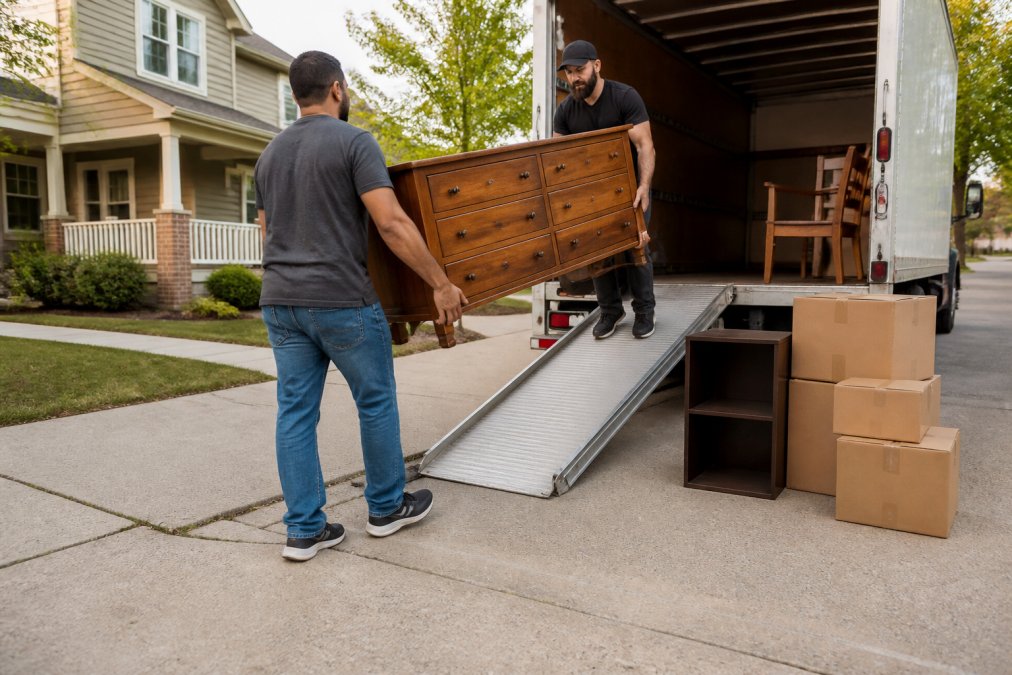
The most affordable alternatives to full service moving companies start with doing the work yourself. A DIY move means you pack everything, load it into a rental truck, drive it yourself, and unload at your destination. You handle all the labor.
The cost difference is dramatic. You're paying only for the truck rental and fuel. Professional movers charge for labor hours, equipment, fuel, and overhead. If you have the time and physical ability, DIY saves money.
But there are real costs beyond the rental fee. You'll need to buy or gather packing supplies: boxes, tape, bubble wrap, packing paper. You might need equipment like a dolly or hand truck. You're also liable for any damage to your belongings or the truck. If something goes wrong, a box falls off the truck, furniture gets scratched, you get in an accident, that's on you.
The physical toll matters too. Loading and unloading a full household is exhausting work, especially if you have heavy furniture, appliances, or a long distance to cover. Most people underestimate how physically demanding it is.
DIY works best for local moves with relatively few items. It's less practical for long-distance relocations or if you have mobility limitations.
Portable Storage Container Rental Costs and Options
Portable storage containers like PODS and U-Pack offer a middle ground between full-service and pure DIY. The company delivers a container to your home, you pack and load it at your own pace, and they transport it to your destination. You unload it yourself or hire help.
This approach gives you flexibility. You're not rushed by a moving crew's schedule. You can pack over several days or weeks. For people juggling work and other commitments, that's valuable.
The trade-off is that you're doing the physical labor of packing and loading. You also need driveway or street space for the container to sit while you load it. If your neighborhood has restrictions or limited space, this might not work.
Portable storage containers are ideal for moves where you need time and flexibility but want professional transportation. They're more affordable than full-service movers but more convenient than renting a truck yourself.
Labor-Only Moving Services: What You Need to Know
Labor-only services are one of the smartest affordable alternatives to full service moving companies if you want to avoid the heavy lifting but keep costs down. You rent your own truck or container, then hire hourly labor to help pack, load, and unload.

Companies connect you with local movers who work by the hour. You book them, they show up at your place, and they handle the physical work while you direct.
This approach works because you control the transportation cost separately from the labor cost. Rent a truck for a day or two, hire movers for the hours you actually need them, and you're done. No hidden fees bundled into a full-service quote.
The liability question matters here. When you hire labor-only services, you're responsible for the truck and the condition of your belongings. The movers are helping you move your stuff, not guaranteeing its safe delivery. Make sure you understand what's covered by their insurance and what isn't.
Labor-only services are perfect if you're comfortable organizing the logistics but want help with the heavy work. They're especially valuable for long-distance moves where you need professional help but don't want to pay full-service pricing.
Rental Truck Options for Long-Distance Moves
Renting a truck yourself is one of the most affordable alternatives to full service moving companies for long-distance relocation. Companies offer trucks in various sizes.
The cost depends on distance, truck size, and season. Peak moving season (summer) costs more than off-peak (winter). Longer distances mean higher fuel costs.
You pay for the truck rental, fuel, and any equipment you need (dolly, furniture pads, tie-down straps). Some rental companies include mileage in the base price; others charge per mile. Read the fine print.
The challenge is that you're responsible for driving a large vehicle, often on unfamiliar routes. If you're not comfortable driving a truck, or if the distance is very long, this adds stress and fatigue. You're also liable for any damage to the truck or your belongings.
Rental trucks work best if you have the driving skills and physical stamina, or if you can split the driving with someone. For shorter distances or moves with fewer items, it's highly cost-effective.
| Moving Method | Best For | Key Advantage | Main Drawback |
|---|---|---|---|
| DIY + Rental Truck | Local moves, few items | Lowest cost | Physical labor, liability |
| Portable Container | Flexible timeline, moderate distance | Self-paced loading | Requires space for container |
| Labor-Only Service | Heavy items, limited time | Professional help, transparent pricing | You arrange transportation |
| Full-Service Mover | Complex moves, long-distance | Everything handled | Highest cost |
How to Pack Fragile Items for Moving Safely
Packing fragile items correctly is critical whether you're doing it yourself or hiring help. Broken dishes and damaged artwork add up fast, and replacing them costs money.
Start with quality packing materials. Cheap boxes fall apart. Use sturdy, new boxes rated for moving. Wrap dishes individually in packing paper or towels, not newspaper, which can transfer ink. Stack plates vertically like records, not flat. They're less likely to break that way.
For glassware and stemware, wrap each piece separately and use divider boxes if you have them. Fill empty spaces with packing peanuts or crumpled paper so items don't shift during transit. Label boxes clearly as "FRAGILE" on multiple sides.
Electronics need special care. Take photos of cable connections before unplugging so you remember how to set them up. Wrap cables together and tape them to the back of the device. Pack electronics in their original boxes if you still have them, they're designed for safe transport.
For artwork and mirrors, wrap them in blankets or moving pads. Use cardboard corners to protect the edges. Stand them upright in the truck rather than laying them flat. Flat storage puts pressure on the glass.
The key principle is: more wrapping than you think you need.
Saving Money on Your Move: Hidden Fees and Off-Peak Timing
Most people focus on the base moving cost and miss the places where expenses pile up. Understanding hidden fees helps you budget accurately and choose the right affordable alternatives to full service moving companies.
Insurance and Liability for DIY Moves
This is the part most DIY movers don't think about until something goes wrong. When you move yourself, you're responsible for your belongings. Your homeowner's or renter's insurance typically doesn't cover items in transit, and it definitely doesn't cover a rental truck.
Choosing the Right Affordable Moving Solution for Your Situation
How much time do you have? If you're moving in two weeks, full-service or portable containers might be necessary. If you have a month, you can plan a DIY or labor-only move.
Frequently Asked Questions
Is it cheaper to use portable storage containers or a full-service moving company?
Portable storage containers typically cost less than full-service moves because you handle packing and loading yourself. With containers, you pay for the container rental and transportation, but not for labor. Full-service companies charge for packing, loading, transportation, and unloading. However, for long-distance interstate relocation, the savings depend on how much you move and whether you need temporary storage at your destination. Request quotes from both options to compare actual costs for your specific situation.
What are the most cost-effective ways to move long-distance?
The most affordable alternatives to full-service moving companies include renting a truck and moving yourself, hiring labor-only services for heavy lifting, or using portable storage containers where you pack and they transport. For very small shipments, freight shipping or consolidated freight services may be cheaper than renting an entire truck. Moving during off-peak seasons (fall and winter) reduces costs significantly. Combining methods, such as renting a truck and hiring hourly labor, often provides the best balance between cost savings and physical effort. Compare moving quotes from multiple providers to identify the lowest-cost option for your specific household goods and distance.
Are there reliable alternatives to hiring professional movers for local moves?
Yes, several cost-effective alternatives work well for local moves. You can rent a truck and recruit friends, hire labor-only services by the hour, or use portable storage containers for a slower, more flexible timeline. Labor-only moving services provide trained crews for loading and unloading without the full-service price tag. Portable containers allow you to pack at your own pace and have the company handle transportation. For very small moves, freight shipping or small shipment solutions may be appropriate. The best choice depends on your budget, the volume of household goods, and how much physical labor you're willing to do yourself. Verify insurance and liability coverage for whichever method you choose.
What should I consider when choosing between DIY moving and professional help?
Compare the total cost of DIY (rental truck, moving supplies, labor costs) against partial or full-service options. Factor in your physical ability to load and unload heavy items safely, the distance of your move, and the value of your household goods. DIY moves save money but require time and effort; labor-only services split the difference by providing professional help at lower cost than full-service. Consider liability coverage and insurance, DIY moves may not include protection for damaged items. For interstate relocation with valuable belongings, professional handling may be worth the extra expense. Request moving estimates from at least three providers, including labor-only and portable container options, to make an informed decision.