 listicle
Benefits of 24-Hour Storage Access
Table of Contents
- What 24-Hour Storage Access Means
- Flexibility for Busy Schedules and Unexpected Needs
- Self Storage Security Features That Protect Your Assets
- Storing Boats and RVs in Self Storage with After-Hours Access
- Commercial Storage Solutions for Inventory and Equipment
- Emergency Access When You Need It Most
- Peace of Mind Through Accessible, Secure Storage
- Frequently Asked Questions
Last Updated: September 25, 2026
What 24-Hour Storage Access Means
24-hour storage access means you can retrieve your belongings at any time, day or night, without waiting for business hours or scheduling appointments. This around-the-clock convenience eliminates the frustration of being locked out when you need something urgently.
24/7 access ensures your stored items are always available when you need them, whether you arrive at noon or 2 AM.
Instead of planning your life around facility hours, you plan storage around your life, invaluable for RV owners, small business operators, and anyone managing seasonal inventory.
Flexibility for Busy Schedules and Unexpected Needs
24-hour storage access solves scheduling conflicts. Professionals with non-traditional schedules access belongings before or after work. Small business owners retrieve stock without disrupting operating hours. Families load or unload boxes at their own pace.
The real advantage emerges when plans change unexpectedly. With 24/7 access, you adapt to circumstances instead of circumstances adapting to you.
Self Storage Security Features That Protect Your Assets
Not all 24-hour facilities implement security equally. Understanding specific security mechanisms helps you evaluate whether a facility's 24/7 access is truly secure.
Surveillance and Monitoring Systems
Video surveillance is foundational, but ask: Are cameras monitored in real-time or only reviewed after incidents? What is the video retention period? Do cameras cover entry gates, hallways, and unit doors? Are they equipped with night-vision?
Electronic Access Control and Audit Trails
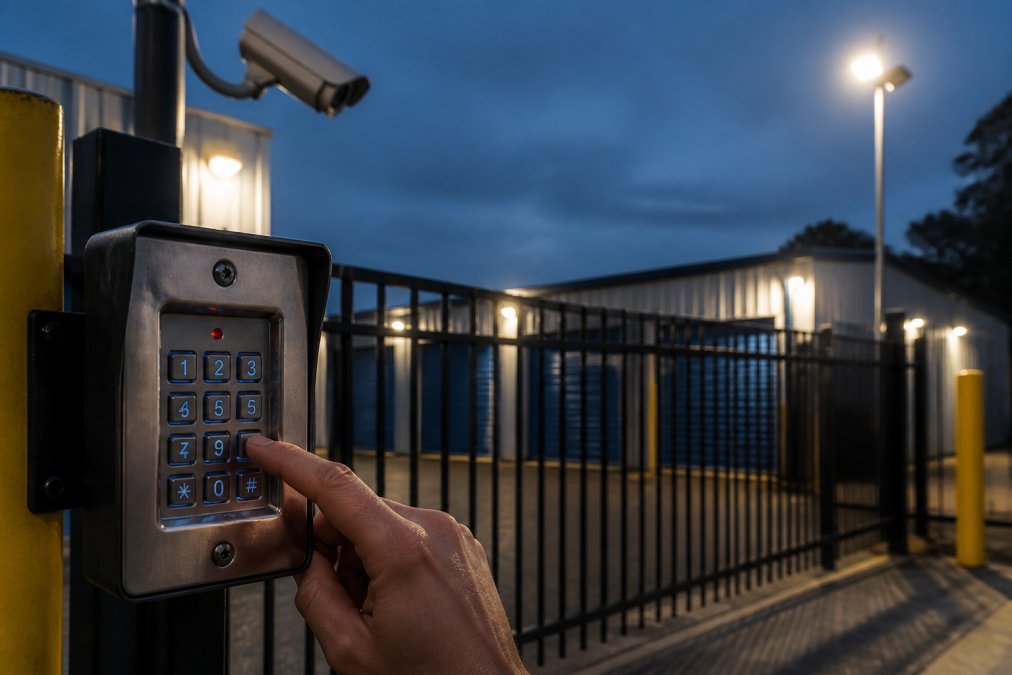
Modern systems log every entry with timestamp and access code. Individual gate codes (not shared master codes) mean each tenant's access is tracked separately. Ask if the facility uses rolling codes or static codes, and whether it can remotely disable access if needed.
Motion-Activated Lighting and Perimeter Security
Motion-activated lighting deters theft, alerts staff to unexpected movement, and reduces energy costs. Perimeter fencing should be at least 6 feet tall with no gaps, and gates should lock automatically after entry.
Individual Unit Security
Your unit's lock is your last line of defense. The facility should prohibit sharing codes or keys; separate credentials should be tied to individual identities.
Insurance and Liability Coverage
Ask about the facility's liability insurance limits and whether it offers optional insurance for high-value items. Your homeowner's or renter's insurance typically excludes off-site storage, so you may need a separate rider for valuable equipment, artwork, or business inventory (Self-storage facility coverage and tips).
Evaluating Security for 24-Hour Access
Prioritize: real-time camera monitoring, remote access-code disabling capability, video retention period, and optional insurance for high-value items. Genuine 24-hour security combines real-time monitoring, electronic access logs, motion-activated lighting, and strong perimeter security.
Storing Boats and RVs in Self Storage with After-Hours Access
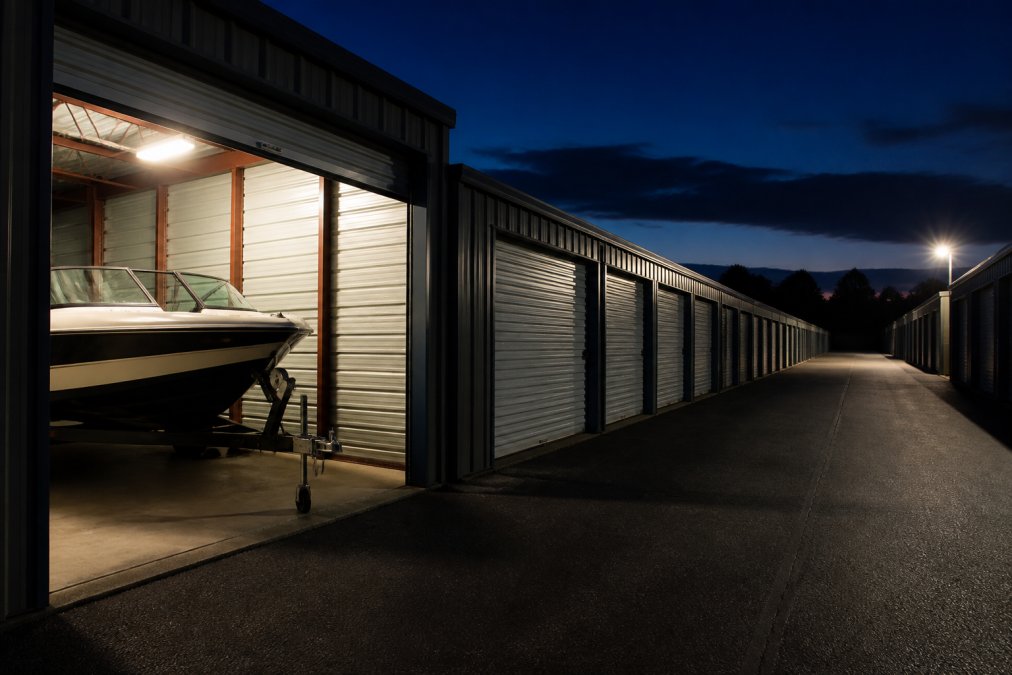
After-hours access is essential during transition seasons, winterizing a boat Sunday evening or retrieving an RV early Monday morning. 24-hour storage access eliminates scheduling conflicts.
Look for wide gate clearance, concrete pads, proximity to major roads, and individual unit lighting. Out of Site Storage specializes in recreational vehicle storage with 24/7 access so you control when your vehicle gets prepped and packed.
Commercial Storage Solutions for Inventory and Equipment
24-hour storage access transforms inventory management. Retrieve stock before opening hours, access equipment for emergency repairs, and manage just-in-time inventory at odd hours. This is critical for contractors needing dawn job-site tools, retailers stocking holiday promotions, and service businesses handling emergency calls.
This flexibility often reduces total space required because you can rotate inventory in and out as needed instead of storing everything simultaneously.
Emergency Access When You Need It Most
Emergencies, vehicle breakdowns, urgent document access, equipment delivery, weather damage, demand immediate access. 24-hour storage facilities deliver this, but accessing your unit at 2 AM requires preparation and awareness.
When 24-Hour Access Becomes Critical
Emergencies that benefit most from 24/7 access include:
- Vehicle breakdowns: Retrieving tools, jumper cables, or spare parts for roadside repairs
- Home damage: Accessing stored belongings after fire, flooding, or weather damage when insurance adjusters need documentation
- Business equipment failures: Retrieving backup equipment or replacement parts to fulfill customer commitments
- Medical or family emergencies: Accessing important documents, medications, or supplies stored off-site
- Seasonal transitions: Retrieving seasonal equipment before unexpected weather changes (e.g., needing snow removal equipment after an early storm)
Safety Checklist for After-Hours Facility Visits
Before You Go:
- Inform someone you know where you're going and when you expect to return
- Visit the facility during daylight hours first to familiarize yourself with the layout, lighting, and camera locations
- Confirm the facility has adequate motion-activated lighting and that it activates when you enter
- Test your access code during business hours to ensure it works
- Have your unit number memorized or written down (don't rely on your phone if the battery dies)
What to Bring:
- A flashlight or headlamp (even well-lit facilities have dark corners)
- Your phone fully charged
- A whistle or personal alarm
- Wear visible clothing and closed-toe shoes
- If retrieving heavy items, bring a dolly or hand truck to avoid injury
During Your Visit:
- Park close to the facility entrance under a light
- Walk directly to your unit without deviating
- Keep your phone accessible and unlocked
- If you feel unsafe at any point, leave immediately and contact facility management
- Avoid visiting alone if possible; bring a trusted friend or family member
- Keep your visit brief, don't linger in the facility longer than necessary
- Note the time you enter and exit; if anything seems off, report it to facility staff
After Your Visit:
- Confirm the gate locked behind you as you exited
- Report any security concerns to facility management immediately, even if nothing was stolen
- If you experienced any safety issues, document them and follow up in writing
Planning for Emergencies Before They Happen
-
Organize your unit logically: Keep frequently needed items (tools, documents, seasonal equipment) near the front of your unit, not buried in the back. Label boxes clearly so you can find what you need quickly in dim lighting.
-
Maintain an inventory: Keep a written or digital list of what you've stored and where it is in your unit. In an emergency, you won't have time to search through everything.
-
Store emergency-access items separately: If you're storing items specifically for emergency access (tools, documents, medications), keep them in a clearly marked, easily accessible location.
-
Know your facility's emergency procedures: Ask facility management what happens if you have a genuine emergency outside normal hours. Knowing this in advance saves critical time.
-
Confirm your access code works: Test your access code during business hours before you need it in an emergency. A code that doesn't work at 2 AM is useless.
Cost Considerations for 24-Hour Access
- How often will you actually need after-hours access? If you access your unit fewer than twice per year outside business hours, the premium may not justify the cost.
- What is the cost of not having access? For a business storing critical equipment, the cost of losing a customer order far exceeds the premium for 24/7 access. For seasonal recreational equipment, the premium may be unnecessary.
- Are there alternative solutions? Some facilities offer limited after-hours access (e.g., 6 AM-10 PM) at a lower premium than full 24/7 access.
Peace of Mind Through Accessible, Secure Storage
The combination of 24-hour access and strong security creates genuine peace of mind. Your belongings aren't just stored, they're stored where you can reach them whenever necessary while remaining protected from theft and damage.
Frequently Asked Questions
Can I access my storage unit at any time of the day or night?
Yes, 24-hour storage access means you can enter your unit whenever you need to, whether that's early morning, late evening, or the middle of the night. This round-the-clock availability is built into facilities designed for this purpose. You'll typically use keypad entry or a gate access code to enter the property outside staffed hours. Check with your storage provider about their specific access methods and any emergency protocols they have in place for after-hours visits.
What are the primary security benefits of 24-hour storage facilities?
24-hour storage facilities combine continuous surveillance, professional-grade lighting, and controlled gate access to protect your belongings. Keypad entry systems track who accesses the property and when, while security cameras monitor activity around the clock. Well-lit facilities deter unauthorized access. These self storage security features work together to reduce theft and damage, giving you confidence that your items, whether personal belongings, vehicles, or business inventory, remain secure regardless of the hour.
Is 24-hour access necessary for storing recreational vehicles?
For boat and RV owners, 24-hour access offers significant practical advantages. You can retrieve your vessel or vehicle whenever weather or schedule permits, without waiting for office hours. This flexibility is especially valuable if you use your RV seasonally or need to access stored boats for maintenance or emergency repairs. While not strictly necessary for long-term off-season storage, around-the-clock access eliminates planning constraints and ensures you can move or inspect your asset on your own timeline, making it a worthwhile feature for most recreational vehicle owners.
How does 24/7 access improve convenience for business inventory storage?
Businesses benefit from 24-hour storage access because it aligns with varied work schedules and operational needs. Whether you're managing inventory for a side hustle, storing equipment for multiple job sites, or handling urgent restocking, on-demand access means you're not bound by facility hours. Commercial storage solutions with round-the-clock availability let you retrieve items for early-morning jobs, late-evening pickups, or weekend operations without disruption. This accessibility directly supports business continuity and eliminates costly delays when you need materials or equipment immediately.