 ultimate-guide
How Much Does Boat or RV Storage Cost? 2026 Guide
Table of Contents
- What Drives RV Storage Cost: A Quick Pricing Breakdown
- Indoor vs Outdoor RV Storage Cost: What Changes the Price
- Average Monthly Cost for Boat Storage by Size and Type
- Factors Affecting Vehicle Storage Rates
- Insurance, Liability, and What Your Policy May Not Cover
- Winterization vs Year-Round Storage: Which Saves You Money
- DIY Storage Solutions vs Paying for a Facility
- Facility Inspection Checklist Before You Reserve
- Frequently Asked Questions
Last Updated: September 18, 2026
What Drives RV Storage Cost: A Quick Pricing Breakdown
RV storage cost is the total you pay to park and protect a recreational vehicle when it is not in use, and it is driven by three things: whether the space is indoors or outdoors, how long the vehicle is, and what the facility offers in security and access. This guide from Out of Site Storage breaks down each driver so you can budget with confidence.
Most owners assume the monthly rate is the whole story. It rarely is.
Storage pricing varies widely by region, facility type, and vehicle size, so no single national figure applies.
Typical Cost Ranges by Storage Type
Pricing depends on the type of space you choose, and the spread between the cheapest and most expensive option is significant.
- Outdoor uncovered parking: The lowest-cost option, with the vehicle exposed to weather.
- Covered storage: A roof overhead with open or partially enclosed sides.
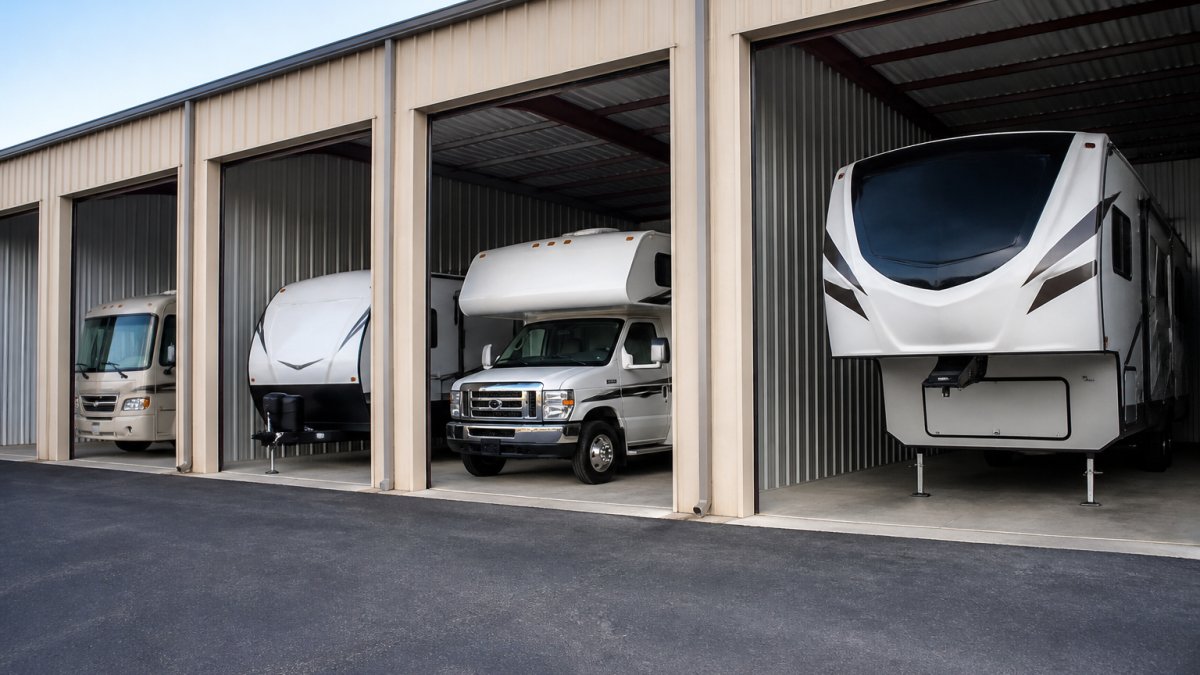
- Indoor warehouse or rack storage: Fully enclosed, often with climate control.
Hidden Fees to Ask About Before You Sign
The monthly rate is only part of the cost breakdown. Ask these questions before signing a storage contract:
- Is a security deposit required, and is it refundable?
- Are there access fees for after-hours entry?
- Does the facility charge an administration or setup fee?
- Is there a minimum term, or is month-to-month available?
- What happens to the rate at renewal?
Indoor vs Outdoor RV Storage Cost: What Changes the Price
Indoor vs outdoor RV storage cost differs mainly in protection and access, not just square footage. Outdoor space is the budget option; indoor space costs more because it shields the vehicle from sun, rain, snow, and pests.
Covered Storage Options Between the Two Extremes
Covered storage sits between outdoor and indoor, and it is often the practical middle ground. Options include:
- Open-sided canopies: A roof with no walls, blocking direct sun and most precipitation.
- Enclosed bays: Three walls and a roof, with one open end for drive-in access.
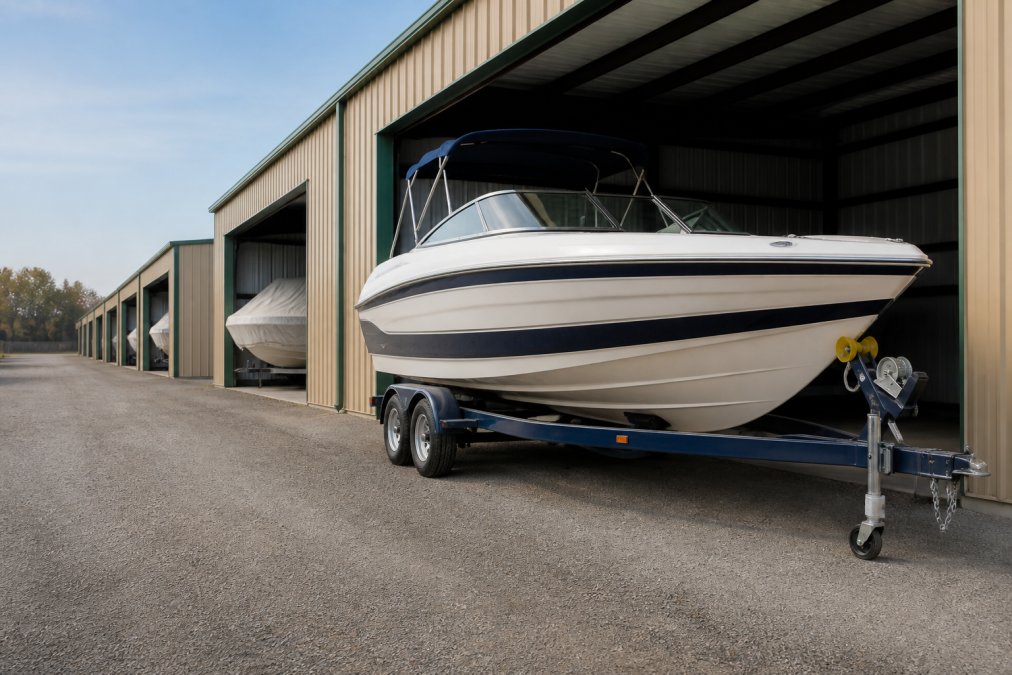
- Rack storage: The vessel or vehicle is lifted into a rack, common for smaller boats and PWC.
Average Monthly Cost for Boat Storage by Size and Type
Average monthly cost for boat storage tracks closely with length and enclosure. A small PWC or trailer storage spot costs far less than a fully enclosed berth for a large cruiser.
Per-Foot Pricing and Why Length Overall Matters
Per foot pricing means the facility charges by the length of the space you occupy, usually measured in feet. This is why length overall, the total tip-to-tail measurement including swim platforms and outboards, matters more than the model name.
| Storage Type | Typical Protection | Access | Best For |
|---|---|---|---|
| Outdoor uncovered parking | Minimal | Usually 24/7 | Budget-conscious owners, short-term |
| Covered storage | Roof only | Varies | Seasonal protection, mid-budget |
| Indoor warehouse | Full enclosure | Scheduled or 24/7 | Long-term, high-value vehicles |
| Rack or dry storage | Full, off-ground | Scheduled | Smaller boats, PWC |
Factors Affecting Vehicle Storage Rates
Factors affecting vehicle storage rates come down to four categories: location, security, amenities, and term length. Each one shifts the number, and understanding them helps you compare quotes fairly.
Location, Security, and Facility Amenities
A storage location closer to a metro area or water access typically costs more because land is scarcer. Rural facilities often charge less but add driving time.
Facility amenities round out the picture:
- On-site management for questions and emergencies
- Wide lanes for trailer storage and easy maneuvering
Insurance, Liability, and What Your Policy May Not Cover
Insurance requirements and liability are the most overlooked part of storage budgeting. Most auto and homeowners policies do not automatically extend full coverage to a stored vehicle or boat, and many storage contracts state that the facility is not responsible for damage from weather, pests, or theft. That means the financial risk of a damaged hull, a cracked gel coat, or a stolen outboard often lands on you, not the facility.
How Coverage Typically Works
A boat or RV is usually covered by a separate policy, not by your homeowners or auto policy. Homeowners policies often exclude motorized vehicles above a certain size or horsepower, and auto policies may not cover a vehicle that is not being driven. If you have a loan on the vehicle, the lender will require physical damage coverage, and the storage facility may require proof of insurance before you sign.
What It Costs and How to Close the Gap
Adding a storage-specific endorsement or a separate policy usually costs a small fraction of the vehicle's value per year. The exact premium depends on the vehicle type, value, and your location. For many owners, the cost is modest compared with replacing a damaged engine or hull.
Before you reserve, take these steps:
- Call your insurer and confirm whether your policy covers the vehicle while stored off-site, and whether it covers theft and weather damage.
- Ask whether the facility requires proof of insurance and what liability limits it expects.
- Read the liability section of the storage contract in full, including any waiver of subrogation or limitation of liability.
- Ask whether the facility carries its own insurance and what it covers.
Liability for Damage During Storage
If the facility damages your vehicle while moving it, the outcome depends on the contract and your insurance. Many contracts require you to file a claim with your own insurer, and the facility may only be liable for negligence. Document the vehicle's condition with photos and a written inventory before you store it, and keep a copy of the contract.
Winterization vs Year-Round Storage: Which Saves You Money
Winterization versus year-round storage is a false choice for many owners. The real question is whether you will use the vehicle during the cold months.
A practical middle path:
- Winterize the engine, water systems, and fuel
- Store in covered or indoor space for the coldest months
- Switch to outdoor uncovered parking in the shoulder seasons
DIY Storage Solutions vs Paying for a Facility
DIY storage solutions look free until you price them out. A driveway spot costs nothing in rent, but it exposes the vehicle to weather, may violate HOA rules, and takes up space you could use.
Weigh the trade-offs honestly:
- Driveway or side yard: No rent, but full weather exposure and possible HOA restrictions.
- Custom cover and pad: Low cost, some protection, but no security.
- Friend or family property: Free or cheap, but no gated access or surveillance.
- Paid facility: Higher cost, but gated access, video surveillance, and 24/7 availability.
Facility Inspection Checklist Before You Reserve
A facility inspection is the step that prevents most post-signing regrets. Visit in person, ideally at dusk, and check the physical condition of the lot, not just the website.
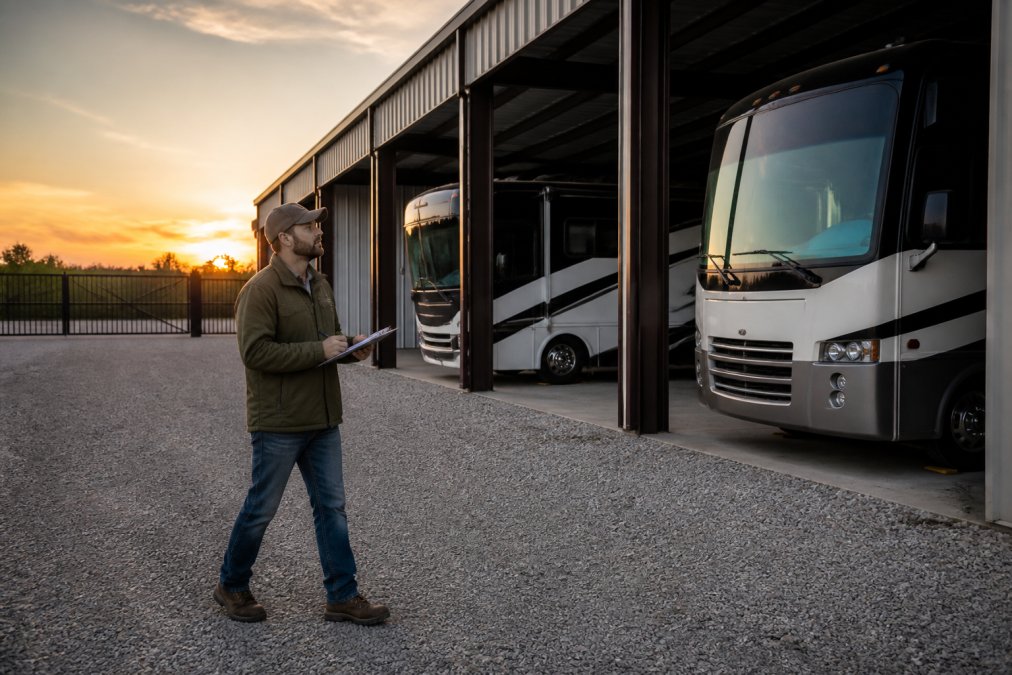
Use this checklist on your visit:
- Gate and entry system work, and access hours match your schedule
- Lot is clean, drained, and free of standing water
- Lighting covers the full lot, including corners
- Video surveillance is visible and positioned over storage rows
- Space actually fits your vehicle's length overall
- Lanes are wide enough to maneuver a trailer
- Contract states deposit, access fees, and renewal terms in writing
- Staff can answer questions about moisture and pest control
Frequently Asked Questions
How much does it cost to store a 20 ft boat?
Pricing for a 20-foot boat depends on whether you choose outdoor uncovered parking, covered storage, or an indoor warehouse bay, plus your location and lease length. Outdoor spaces cost the least, while climate-controlled indoor units cost the most. Because rates vary by facility and season, request a quote for your exact boat length rather than relying on a national average. Many facilities also charge a security deposit and access fees on top of the monthly rental rate.
What factors affect vehicle storage rates the most?
The biggest drivers are storage type (outdoor, covered, or indoor), vehicle dimensions including length overall, and location. Climate-controlled buildings, gated access, video surveillance, and on-site management all raise the monthly rate. Lease terms matter too: a long-term lease usually costs less per month than a short-term lease, and seasonal rates in winter can push prices higher when demand peaks.
Is it better to choose covered or uncovered storage for an RV?
Uncovered outdoor parking is the cheapest option but leaves your RV exposed to sun, hail, and snow. Covered storage costs more but blocks direct sun and most precipitation, which helps protect roofing, seals, and paint. Fully indoor, climate-controlled storage costs the most and suits high-value rigs or long-term storage. If you store seasonally and want a middle ground, covered storage often gives the best balance of protection and price.
Do I need my own insurance to store a boat or RV?
Most storage facilities require you to carry your own insurance and will ask for proof before you sign a storage contract. Facility liability typically covers the building and grounds, not your vehicle's contents or damage from storms, theft, or pests. Check your policy for off-site storage coverage, and ask whether the facility requires a minimum coverage amount. Some facilities offer add-on protection plans, but these vary widely, so read the terms carefully.
Storing a boat or RV is a recurring cost, and the cheapest headline rate is rarely the best value once deposits, access limits, and insurance gaps are factored in. Out of Site Storage gives owners secure, clean facilities with 24/7 access, specialized boat, RV, and vehicle storage, and convenient online payment and reservation. Get started with Out of Site Storage and reserve a space that protects your investment year-round.