 how-to
How to Pack Fragile Items for Moving Safely
Table of Contents
- Gather Your Packing Supplies and Materials
- Prepare Your Boxes and Create a Sturdy Base
- How to Pack Dishes for Moving Without Breakage
- Wrap and Cushion Fragile Items Properly
- Double-Box Delicate Items for Maximum Protection
- How to Label Fragile Boxes for Safe Handling
- Load and Transport Your Packed Fragile Items
- Conclusion
- Frequently Asked Questions
Last Updated: September 21, 2026
Gather Your Packing Supplies and Materials
To pack fragile items effectively, you need the right materials. Material choice involves trade-offs between protection level, cost, and environmental impact.
The best packing materials include bubble wrap (shock absorption), packing paper (individual wrapping), and foam sheets (extra protection inside boxes).
Traditional Packing Materials:
- Bubble wrap (at least 50 feet), excellent shock absorption but single-use plastic
- Packing paper (several rolls), versatile, recyclable, works for most items
- Foam sheets or foam corners, rigid protection for flat or delicate pieces
- Packing peanuts, void fill material, though many are petroleum-based polystyrene
- Heavy-duty packing tape, essential for box sealing
- Corrugated boxes (small, medium, and large), recyclable and reusable
- Permanent markers, for labeling
Eco-Friendly Alternatives to Consider:
Eco-friendly alternatives include kraft paper and newsprint (cost-effective for lighter items), biodegradable packing peanuts (20-30% more expensive but compostable), recycled cardboard and paper (free), towels and blankets (reduce waste and costs), and mushroom packaging (fully compostable but limited availability).
Heavy items like dishes need bubble wrap or foam sheets. Lighter decorative items and artwork can use kraft paper with crumpled paper void fill. Electronics benefit from static-reducing paper rather than bubble wrap.
Organize supplies in one central location before packing to save time and work faster.
Prepare Your Boxes and Create a Sturdy Base
A weak box foundation leads to crushed items. Choose small boxes for heavy fragile goods like dishes, medium and large boxes for lighter items. Never use damaged or damp boxes.
Create a sturdy base by taping the bottom seams in an H-pattern: one strip down the center, one on each side.
Add 2-3 inches of packing peanuts, packing paper, or foam sheets to the bottom. This cushioning absorbs impact and prevents items from hitting the cardboard base directly.
How to Pack Dishes for Moving Without Breakage
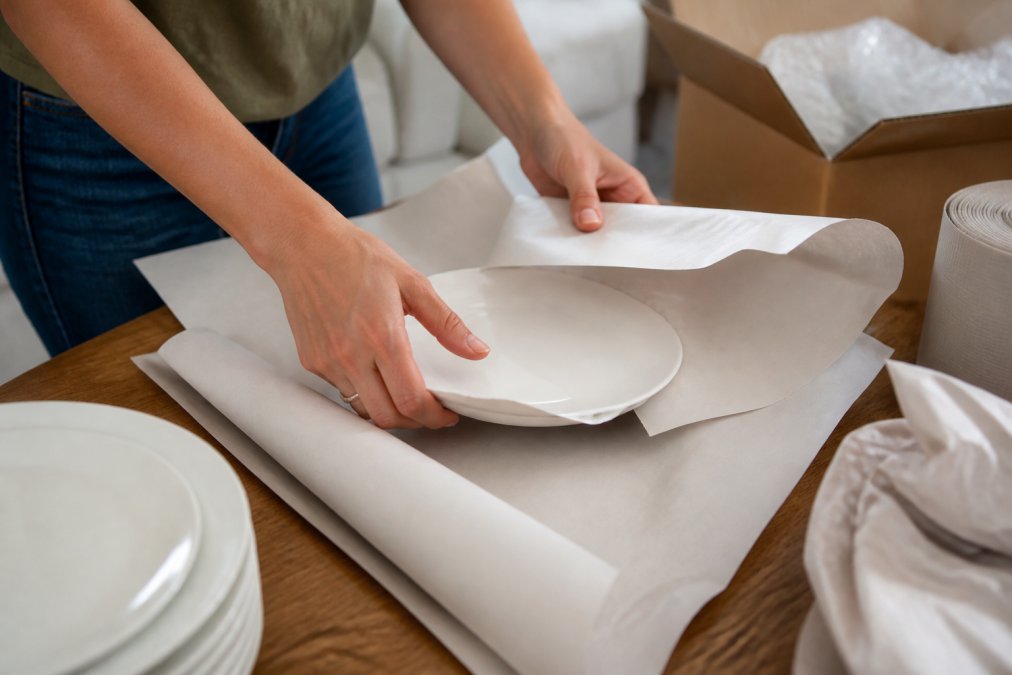
Dishes break when they shift or stack unevenly. Wrap each one individually and pack them vertically, like records in a filing cabinet. Vertical stacking distributes weight evenly and prevents cracking.
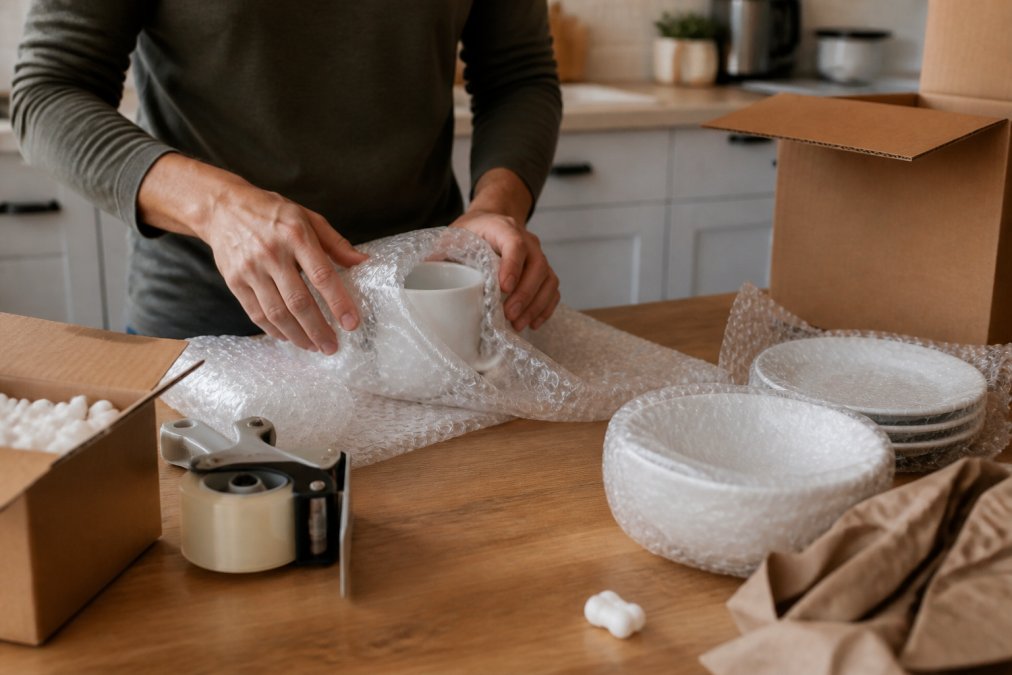
Wrap each plate with 2-3 layers of packing paper, add bubble wrap for delicate china, stand plates upright in the box, and fill gaps with crumpled paper. Pack bowls separately with packing paper between each one, and fill empty spaces with void fill material.
Wrap glasses and cups individually with packing paper, stuff the inside with crumpled paper, and place them upright in small boxes. Never pack dishes flat; vertical packing spreads the load and is much safer.
Wrap and Cushion Fragile Items Properly
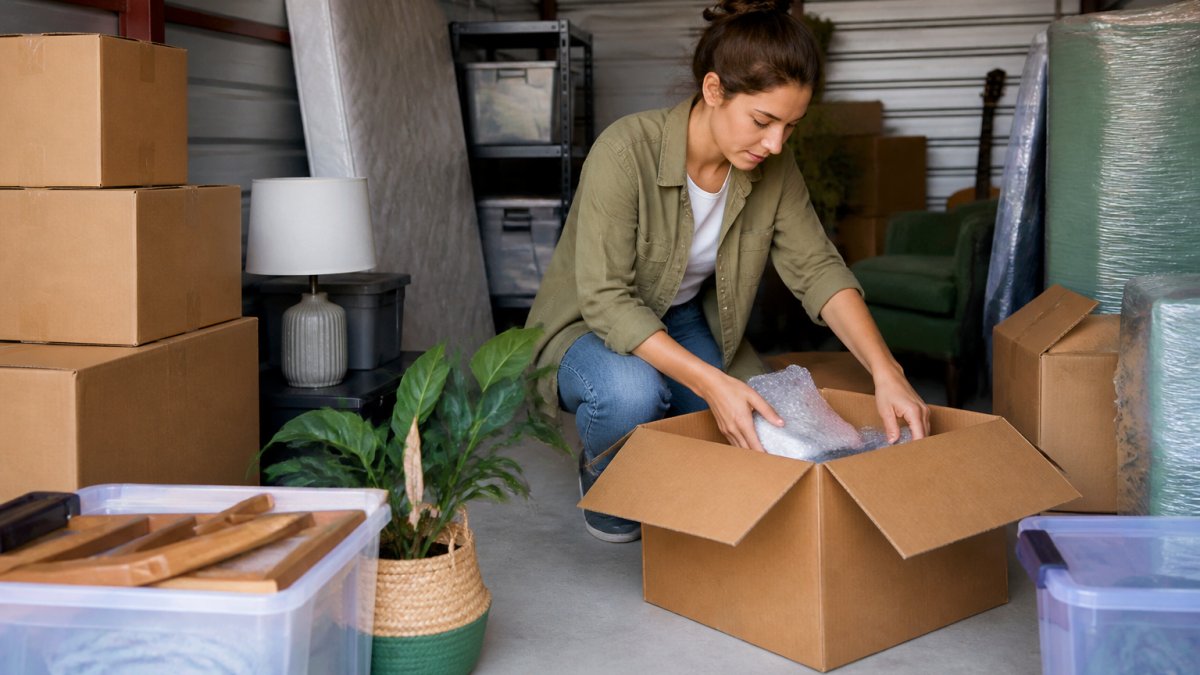
Individual wrapping is the most important step. Start with packing paper (2-3 layers for delicate ceramics) to cushion items and prevent them from touching each other.
Add bubble wrap as your second layer for shock absorption. Secure with tape and label if valuable or irreplaceable.
For electronics, glassware, and decorative items, consider foam sheets as an additional layer. Foam sheets provide rigid protection and prevent crushing under weight. They work especially well for flat-screen items or pieces with protruding parts.
Avoid gaps between wrapped items in the box. Crumpled packing paper fills empty spaces and prevents items from shifting during transport. This void fill material absorbs vibrations and impacts that might otherwise damage your goods.
Double-Box Delicate Items for Maximum Protection
Double-boxing creates an extra layer of shock absorption for your most valuable or fragile possessions. This technique uses two boxes with cushioning between them.
Double-boxing works best for items that are irreplaceable or extremely fragile. Antique glassware, fine china, and electronics benefit most from this extra protection. The outer box absorbs impact while the inner box protects the item itself.
Here's how to double-box fragile goods:
- Pack the item in a small box using standard wrapping and cushioning
- Seal the inner box completely with heavy-duty tape
- Create cushioning in a larger box with 3-4 inches of packing peanuts on the bottom
- Place the inner box in the center of the larger box
- Surround with cushioning on all sides, at least 2-3 inches of packing peanuts
- Fill the top with additional packing peanuts before sealing
- Seal the outer box securely with tape in an H-pattern
The key is leaving enough space between boxes for cushioning material. Never pack the inner box directly against the outer box walls. That defeats the purpose of double-boxing.
This technique is especially valuable for how to pack fragile items when you're storing them long-term at a facility like Out of Site Storage.
How to Label Fragile Boxes for Safe Handling
Clear labeling tells movers and handlers how to treat your boxes. Without proper labels, fragile boxes get stacked under heavier items or tossed around carelessly. However, labeling is only one part of a complete documentation strategy; photographing items before packing protects you against loss and insurance disputes.
Labeling for Handler Safety:
Here's what to include on fragile boxes:
- Write "FRAGILE" in large letters with a permanent marker
- Add "THIS SIDE UP" with arrows pointing upward
- Include a brief description: "Dishes," "Glassware," or "Electronics"
- Note if the box contains irreplaceable items
- Add your name and contact information
Documentation and Inventory for Insurance Protection:
Step-by-step documentation process:
-
Photograph each fragile item individually, Take clear photos of dishes, glassware, electronics, and artwork from multiple angles. Include close-ups of any existing damage or wear so you can distinguish pre-move condition from transport damage.
-
Create a written inventory, List each item with a description, approximate value, and the box number where it will be packed. Example: "Box 3: 12 dinner plates (Wedgwood china, inherited 1995), estimated value $400."
-
Note high-value items separately, If you have antiques, heirlooms, or expensive electronics, create a separate high-value inventory. This documentation is essential for insurance claims and helps movers understand which boxes require extra care.
-
Store photos and inventory digitally, Upload photos to cloud storage (Google Drive, Dropbox, iCloud) so they're accessible even if your phone or computer is damaged. Keep a printed copy as backup.
-
Assign box numbers and cross-reference, Label each box with a number (Box 1, Box 2, etc.) and match it to your written inventory. This makes it easy to track items and identify which box contains what if damage occurs.
-
Document the packing process, Take a photo of each packed box before sealing it. This shows how items were arranged and cushioned, which supports your account if you need to file an insurance claim.
Insurance Claim Protection:
Load and Transport Your Packed Fragile Items
How you load fragile boxes into a moving truck matters as much as how you pack them. Improper loading can undo all your careful packing work.
Here are loading best practices:
- Place fragile boxes in the truck last
- Stack them carefully without overstacking
- Keep them away from the truck's edges
- Use straps to secure them in place
- Leave space between boxes for air circulation
- Avoid placing heavy items on top of fragile boxes
- Keep the truck temperature stable if storing items temporarily
Conclusion
Packing fragile items for moving safely requires the right materials, proper technique, and careful attention to detail. Each step builds on the previous one, from gathering supplies through final loading. The time you invest in careful packing pays off when your belongings arrive undamaged.
Frequently Asked Questions
Should I use bubble wrap or packing paper for fragile items?
Both serve different purposes when you pack fragile items. Bubble wrap provides superior shock absorption for delicate electronics, glassware, and fine china, making it ideal for items prone to impact damage. Packing paper works well as an initial wrap to prevent items from shifting and scratching each other. Many movers use both: wrap items first in packing paper, then add a layer of bubble wrap for extra cushioning. The combination maximizes protection without excessive bulk.
What's the best way to pack glassware to prevent breakage?
Start by wrapping each glass individually in packing paper, then add bubble wrap with the bubbles facing inward. Stack glasses vertically in small boxes rather than laying them flat, as vertical stacking reduces pressure on the rims. Fill all void spaces with packing peanuts or crumpled paper to prevent movement. Use corrugated boxes and reinforce the bottom with heavy-duty tape. Never mix glassware with heavier items, and clearly mark boxes as fragile on all sides.
How do I pack fragile items if I'm storing them temporarily before moving?
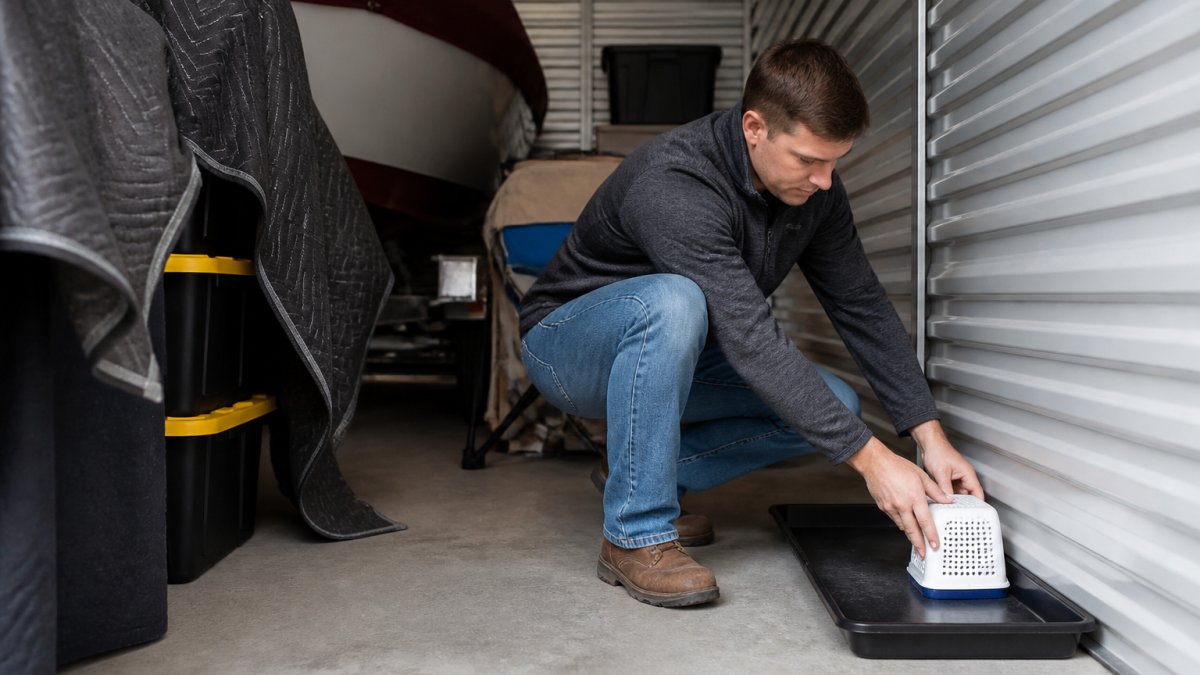
Use the same protective techniques but add moisture protection. Wrap items individually, use corrugated boxes, and add desiccant packs to absorb moisture in storage. Store boxes on shelves rather than the floor to protect against water damage. Label boxes with contents and the date packed. If storing for several months, check on items periodically. Out of Site Storage's units can provide extra protection for valuable fragile goods during temporary storage.
What should I do if a fragile item breaks during the move?
Document the damage immediately with photos before unpacking further. Check your moving company's liability coverage and file a claim within the required timeframe (typically 30 days). Keep all packing materials and the damaged item as evidence. For items stored at Out of Site Storage, report damage to management right away. Consider purchasing additional moving insurance for high-value fragile items before the move to ensure full coverage in case of breakage.