 how-to
How to Store RV Safely: 7-Step Guide
Table of Contents
- How to Store RV Safely: Essential Preparation Steps
- Step 1: Clean and Inspect Your RV Inside and Out
- Step 2: Disconnect Battery and Manage Electrical Systems
- Step 3: RV Winterization Checklist for Cold Climate Storage
- Step 4: Implement Moisture Control and How to Prevent Mold in Stored RV
- Step 5: Protect Tires, Seals, and Exterior Components
- Step 6: Indoor vs Outdoor RV Storage Costs and Security Setup
- Step 7: Create a Long-Term Storage Maintenance Schedule
- Frequently Asked Questions
Last Updated: September 28, 2026
How to Store RV Safely: Essential Preparation Steps
Storing an RV properly protects your investment from weather damage, pest intrusion, and mechanical breakdown. Many owners rush through storage without a plan, only to discover mold, dead batteries, or corroded seals when spring arrives.
Step 1: Clean and Inspect Your RV Inside and Out
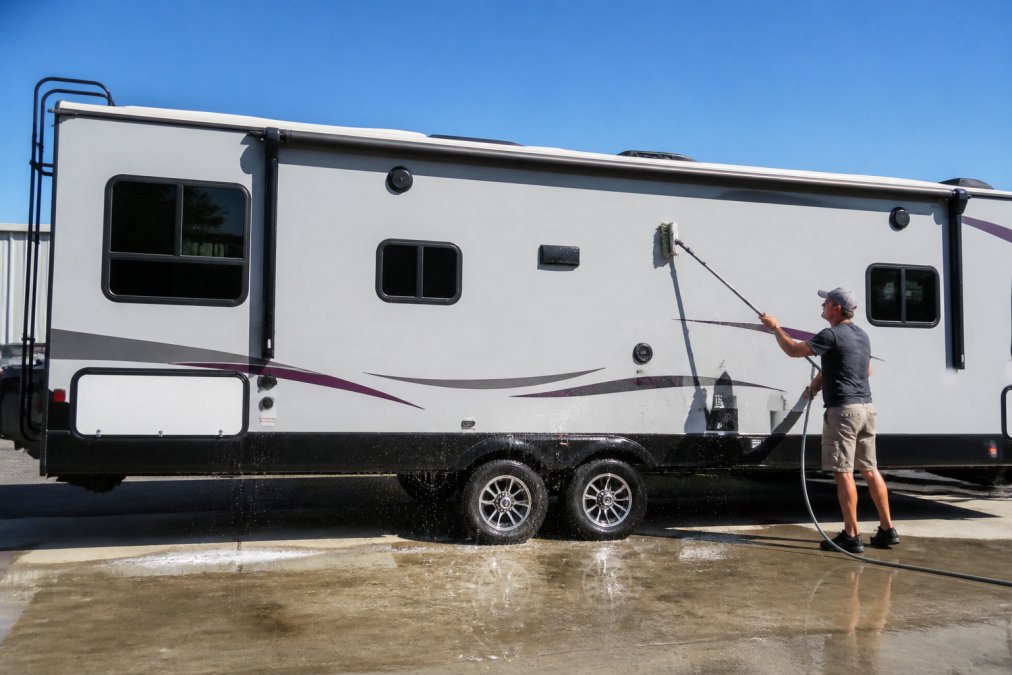
Start by removing all dirt, debris, and organic material from your RV's exterior and interior. A thorough cleaning eliminates food sources that attract rodents and prevents mold growth on surfaces.
Exterior cleaning:
- Wash the roof, sides, and undercarriage with mild soap and water
- Inspect seals around windows, doors, and vents for cracks or gaps
- Check the exterior cover for damage if you plan to use one
- Clean gutters and drainage areas
Interior cleaning:
- Remove all food, trash, and perishable items
- Wipe down cabinets and surfaces to eliminate spills
- Vacuum carpets and upholstery thoroughly
- Empty holding tanks completely
Step 2: Disconnect Battery and Manage Electrical Systems
A connected battery slowly drains during storage. Disconnecting the battery prevents this drain and protects your electrical system.
Battery disconnection steps:
- Locate the main battery disconnect or negative terminal
- Remove the negative cable first (always negative first, positive second)
- Store the battery in a cool, dry location or use a battery tender
- Leave the positive cable disconnected and insulated
Step 3: RV Winterization Checklist for Cold Climate Storage
Winterization protects water systems and engines from freeze damage. Water expands when frozen, cracking pipes, tanks, and appliances.
Water system winterization:
- Drain all fresh water tanks completely
- Open all faucets and let water drain fully
- Locate the low-point drains and open them
- Run water heater bypass valves to drain the heater
- Add RV antifreeze to all drains and holding tanks
Engine winterization:
- Add fuel stabilizer to a full fuel tank
- Run the engine to circulate stabilizer
- Change oil and filter
- Check coolant levels and top off if needed
Step 4: Implement Moisture Control and How to Prevent Mold in Stored RV
Moisture is the primary enemy of stored RVs. High humidity promotes mold growth, wood rot, and metal corrosion.
Moisture control methods:
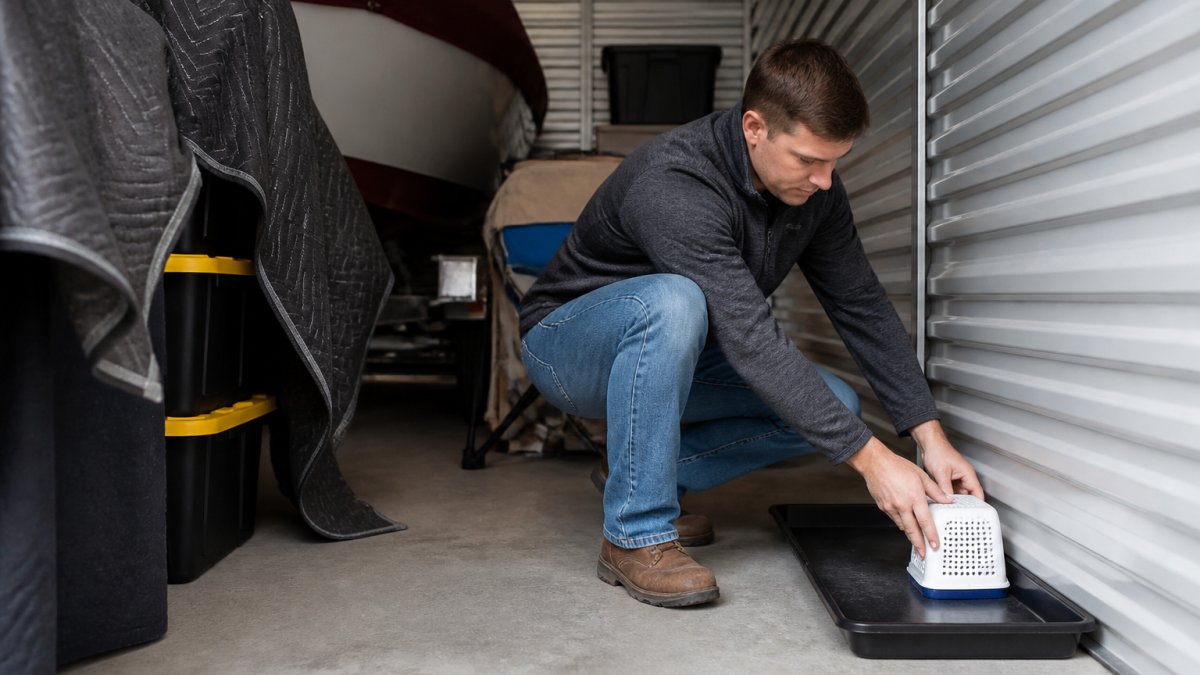
- Install one or more dehumidifiers
- Open interior vents slightly for air circulation
- Place moisture-absorbing products (desiccant bags) in cabinets
- Ensure exterior vents are clear and unobstructed
- Avoid sealing the RV completely, some air movement is necessary
Step 5: Protect Tires, Seals, and Exterior Components
Tires deteriorate from UV exposure and pressure loss. Seals and gaskets harden and crack during storage.
Tire protection:
- Inflate tires to the maximum recommended pressure
- Cover tires with UV-protective tire covers
- Place jack stands under frame to relieve tire weight
- Move the RV slightly every few months to prevent flat spots
Seal and gasket protection:
- Apply protectant products to rubber seals
- Check door and window gaskets for cracks
- Lubricate slide-out mechanisms with appropriate lubricant
- Inspect awning seals and hinges
Step 6: Indoor vs Outdoor RV Storage Costs and Security Setup
Your storage choice affects protection level, costs, and insurance coverage. Indoor storage provides superior protection but costs more.
Indoor storage advantages:
- Complete protection from weather, UV exposure, and fading
- Reduced risk of vandalism, theft, and weather-related damage
- Stable temperature and humidity (typically 50-70°F, 30-50% relative humidity)
- Lower maintenance requirements and fewer pest intrusions
- Better insurance rates; many policies offer 10-15% discounts for climate-controlled storage
Outdoor storage advantages:
- Lower monthly costs (typically 40-60% cheaper than indoor)
- Easier access and retrieval without facility hours
- Suitable for short-term storage (under 6 months)
- Works well in arid climates with low humidity and minimal precipitation
Security matters regardless of storage type. Choose a facility with:
- 24/7 or staffed access with controlled entry
- Surveillance camera coverage
- Adequate lighting
- Fencing and gated perimeter
- Insurance coverage options
Physical security steps:
-
Lock all RV doors and windows
-
Disconnect the battery to prevent electrical drain and theft-related system activation
-
Consider a steering wheel lock, hitch lock, or brake lock as visible deterrents
-
Remove or hide high-value items (electronics, tools, outdoor gear)
-
Document your RV's condition with photos and video before storage for insurance claims
-
Temperature and humidity sensors: Wireless sensors placed inside the RV alert you via smartphone if humidity exceeds 60% (mold risk) or temperature drops below freezing (pipe burst risk). Battery-powered sensors cost $30-$100 and transmit data to a cloud app; no hardwiring required.
-
Motion detection and door sensors: Magnetic door sensors alert you if someone opens the RV door or window. Motion sensors inside detect movement, useful for detecting pest activity or unauthorized entry.
-
Water leak detectors: Small sensors placed under sinks, near water heaters, and in low spots detect standing water or active leaks and send alerts before damage spreads.
-
Battery voltage monitors: A wireless monitor on your RV's battery sends alerts if voltage drops below a safe threshold, indicating parasitic drain or a failing battery.
Step 7: Create a Long-Term Storage Maintenance Schedule
Long-term storage requires ongoing attention. A maintenance schedule prevents small problems from becoming major damage. Unlike pre-storage prep, which happens once, maintenance during storage is about catching deterioration before it compounds.
Monthly checks during storage:
- Inspect for signs of moisture, mold, or pests
- Operate slide-outs to circulate lubricant and verify seals haven't frozen
- Check tire pressure and condition (tires lose 1-2 PSI per month in cold storage)
- Verify dehumidifier operation and check for standing water
- Look for water stains, soft spots, or musty odors
Quarterly maintenance (every 3 months):
- Run the engine for 15-20 minutes to circulate oil, fuel stabilizer, and coolant; verify it starts reliably
- Check battery condition if stored on-site; a parasitic drain can drop voltage 0.5V per month
- Inspect seals and gaskets for hardening or cracking; reapply protectant if needed
- Review insurance coverage status and verify your policy covers the storage location type
- Check for pest activity (droppings, nesting material, chewed wiring insulation)
- Inspect undercarriage and frame for rust or corrosion, especially in coastal or high-humidity regions
Pre-season preparation (4-6 weeks before use):
- Reconnect battery and load-test it; replace if voltage is below 12.4V at rest
- Inspect all systems for damage: plumbing, electrical, appliances, roof seals
- Test water and electrical systems; flush lines to clear antifreeze residue
- Check propane system operation and verify no leaks at connections
- Verify tire condition and pressure; inspect for dry rot (cracking in sidewalls)
- Inspect brake lines and suspension components for corrosion
Maintenance triggers, act immediately if you observe:
- Mold or mildew smell (indicates humidity above 60%; increase dehumidifier capacity)
- Soft spots on walls or floor (water intrusion; locate and seal the leak)
- Pest droppings or entry holes (seal gaps with steel wool and caulk; set traps)
- Battery voltage below 12V (recharge or replace; deep discharge damages lead-acid batteries)
- Tire sidewall cracking or bulges (replace before driving; unsafe at highway speeds)
- Propane smell (evacuate; check for leaks at regulator and tank connections)
Frequently Asked Questions
How do you store an RV when not in use?
Start by thoroughly cleaning the interior and exterior, then disconnect the battery to prevent electrical drain. Flush the water system and add antifreeze to holding tanks. Use a dehumidifier or moisture absorbers to control humidity, place tire chocks under the wheels, and cover the RV with a quality exterior cover. Choose a secure storage facility with 24/7 access and climate control if possible. Check on your RV monthly during long-term storage to monitor for pests, moisture, or other issues.
What should I do to prepare my RV for long-term storage?
Complete winterization by flushing fresh water lines, adding RV antifreeze to the plumbing system, and stabilizing fuel with a fuel stabilizer. Disconnect the battery or use a battery maintainer. Remove or secure all food, trash, and perishables to prevent pest attraction. Install vent covers and check seals and gaskets around doors and windows. Ensure slide-outs are fully closed and secured. Place the RV on jack stands or concrete blocks, engage the parking brake, and use wheel chocks. Create a maintenance schedule to inspect the RV every 30 days.
How do I prevent pests from entering my RV during storage?
Remove all food, trash, and debris from inside the RV before storing it. Install vent covers over roof vents, furnace intakes, and plumbing vents to block rodent entry. Seal gaps around slide-outs, windows, and doors with weatherstripping or caulk. Place rodent deterrents like peppermint oil-soaked cotton balls in cabinets and storage compartments. Use pest traps around the exterior perimeter. Choose a storage facility that maintains pest control measures and has regular inspections. Check your RV monthly for signs of rodent droppings or damage.
Is it better to store an RV inside or outside?
Indoor climate-controlled storage protects your RV from UV damage, weather, and temperature extremes, extending the life of the exterior and interior components. Outdoor storage with a quality cover is more affordable but exposes your RV to sun, rain, snow, and potential vandalism. Consider your regional climate, how long you'll store the RV, and your budget. For long-term storage in areas with harsh winters or high humidity, indoor storage reduces mold risk and moisture damage. Outdoor storage works for short-term storage if you use a heavy-duty cover and maintain proper ventilation underneath.